




Neck Pain Tool
Neck Pain Tool
🚀 Developed by an Award-Winning Physiotherapist with 40 years experience
💪 Proven to Relieve Pain & Improve Mobility
👨⚕️ Used by Athletes, Therapists & Pain Sufferers Worldwide
🛠️ Durable, High-Quality Design for Deep Tissue Therapy
💰 Cost-Effective Alternative Therapy
Couldn't load pickup availability

GUARANTEED SAFE & SECURE CHECKOUT
Great reasons to buy from us
 FREE SHIPPING
 5 Year Warranty High Quality product
 60 Days Money Back Guarantee
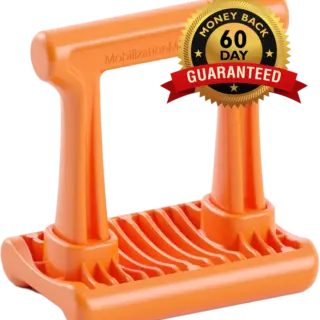 Unique design that penetrates deep into tight muscles
 Thousands of Happy users
 Able to work on every part of your body
- DESCRIPTION
- Shipping
- Reviews
Neck Pain Relief: How to Release Tight Neck Muscles Naturally
Written by Peter Gregory PT, BSc Physiotherapy
Over 40 years of clinical experience
Neck Pain That Won't Go Away?
You've stretched.
You've had massages.
You've tried a foam roller.
Maybe you've even bought a massage gun.
Yet your neck still feels stiff, tight or painful.
The problem may not be that your muscles are too short—it may be that the fascia surrounding your muscles has become tight and restricted.
That's why stretching alone often provides only temporary relief.
Common Symptoms of Neck Muscle Tightness
Neck muscle tension can cause:
- Stiffness when turning your head
- Pain looking over your shoulder
- Headaches starting at the base of the skull
- Pain between the shoulder blades
- Tight upper trapezius muscles
- Tech neck from prolonged computer or phone use
- Muscle knots (trigger points)
- Reduced range of motion
- Shoulder pain originating from the neck
These symptoms are extremely common in office workers, tradies, athletes and anyone who spends long periods sitting.
What Causes Tight Neck Muscles?
Many people assume their muscles simply become "tight."
In reality, several factors can contribute:
- Poor posture
- Long hours at a computer
- Looking down at your phone
- Stress and muscle guarding
- Previous injury
- Sleeping position
- Reduced movement
- Fascial restrictions developing over time
When muscles remain under constant tension, the surrounding fascia can lose its ability to glide freely.
This is where conventional stretching often falls short.
Why Stretching Doesn't Always Work
Traditional stretching pulls muscles lengthwise.
While this may temporarily improve flexibility, it often doesn't restore normal movement between layers of muscle and fascia.
Many people experience relief while stretching...
Only to become tight again a few hours later.
Introducing Sideways Stretching™
The Mobilization Magic Tool uses a unique technique called Sideways Stretching™.
Instead of simply pressing into tight tissue, the tool allows you to gently move the muscle and fascia sideways across the muscle fibres while sustained body weight provides consistent pressure.
This helps:
- Reduce muscle guarding
- Improve mucle fibers glide past each other
- Release trigger points
- Improve circulation
- Restore normal movement
- Increase range of motion
Unlike traditional stretching, which pulls muscles lengthways, Sideways Stretching™ gently bends the muscle fibres across their width. This sideways movement encourages the fibres to slide past one another, helping reduce stickiness between them that can restrict normal muscle movement. As the muscle regains its ability to glide freely, movement becomes easier and pain and stiffness often decrease.
Which Neck Muscles Commonly Become Tight?
Upper Trapezius
One of the most common causes of neck and shoulder tension.
Symptoms include:
- Tight shoulders
- Pain carrying bags
- Neck stiffness
- Tension headaches
Levator Scapulae
Often responsible for pain when turning the head.
Typical symptoms:
- Sharp pain looking over one shoulder
- Pain between the neck and shoulder blade
- Morning stiffness
Sternocleidomastoid (SCM)
This muscle can produce surprising symptoms including:
- Headaches
- Jaw discomfort
- Dizziness
- Pain around the ear
- Facial pain
Suboccipital Muscles
These small muscles at the base of the skull frequently contribute to:
- Headaches
- Eye strain
- Neck stiffness
- Reduced head rotation
Scalenes
Tight scalenes may contribute to:
- Neck tightness
- Shoulder pain
- Tingling into the arm
- Difficulty turning the head
How to Use the Mobilization Magic Tool
- Position the tool under the painful muscle.
- Relax your body weight onto the tool.
- Allow the pressure to settle for several minutes.
- Once comfortable, gently perform Sideways Stretching™ by moving the muscle across the tool.
- Continue for 30–60 seconds before moving to another area.
Many users notice a brief increase in discomfort before the tissue begins to soften and the tool gradually sinks deeper into the muscle.
Why Choose the Mobilization Magic Tool?
Unlike foam rollers or massage guns, the Mobilization Magic Tool is designed to target specific muscles with precision.
Benefits include:
- Physio-designed
- Targets deep muscles
- Precise trigger point treatment
- Uses body weight instead of arm strength
- Suitable for home use
- Compact and portable
- Works on the neck, shoulders, back, hips, legs and arms
What Physiotherapists Say
“I have found this Neck Pain to be very effective in my daily work as a physiotherapist treating a variety of musculoskeletal conditions. The innovative design allows the tool to be used on all myofascial regions of the body that can succumb to tightness and pain.
Pressure can be easily adjusted by orientating the tool in a different position or the placement of towels on either side of the tool. Clinically, I found significant improvements in hamstring and groin tightness after using the tool consistently. Overall, the design and quality of the tool makes it superior to using traditional foam rollers and spikey balls as it provides greater versatility in treating different musculoskeletal issues, provides optimal pressure and adjustability.”
— Julian Tubman, Physiotherapist
FAQs – Neck Pain Relief Tool
Is it safe for daily use?
Yes! Designed for at-home therapy, use daily to release fascia and reduce persistent pain.
Will it help with my tension headaches?
Absolutely. It addresses tension headache, headache behind eyes, and headache on top of head.
How is it different from other tools?
It mimics the deep, focused pressure of a physiotherapist’s elbow. Most tools can't do that.
Can I use it for shoulder or spinal pain too?
Yes. It’s effective for shoulder pain, spinal manipulation, and neck injuries.
Can it replace physical therapy?
It’s designed to complement or substitute conservative therapy when used consistently. (See Cleveland Clinic – Cervical Pain Treatment)
🧾 About the Author
Written by Peter Gregory, BAppSc (Physiotherapy)
Peter is the inventor of the Mobilization Magic Tool and a practising physiotherapist with over 40 years of clinical experience treating musculoskeletal dysfunction.
He specialises in fascia release and developed the tool to give everyone access to professional-grade results without needing a clinic visit.
“I’m so confident the Mobilization Magic Tool will help you achieve outstanding results that if it doesn’t, I want you to email me directly at help@mobilizationmagic.com. I’ll help you personally. And if you're still not happy, I’ll refund 200% of what you paid—no questions asked.”
Why Trust Mobilization Magic?
Peter Gregory PT has treated patients for more than 40 years as a physiotherapist.
The Mobilization Magic Tool was developed after years of clinical experience helping people with persistent muscle tightness and fascial restrictions, with the goal of providing a practical home treatment option.
Ready to Relieve Neck Pain?
If you're tired of stretching without lasting results, the Mobilization Magic Tool offers a different approach.
By combining sustained pressure with Sideways Stretching™, it helps release tight muscles and improve movement so you can get back to doing the things you enjoy.
Shop the Mobilization Magic Tool today and experience a new way to relieve stubborn neck pain.
- SKU: MMT-2
Free Shipping

Neck Pain Tool


Relieve Your Neck Pain & Stiffness
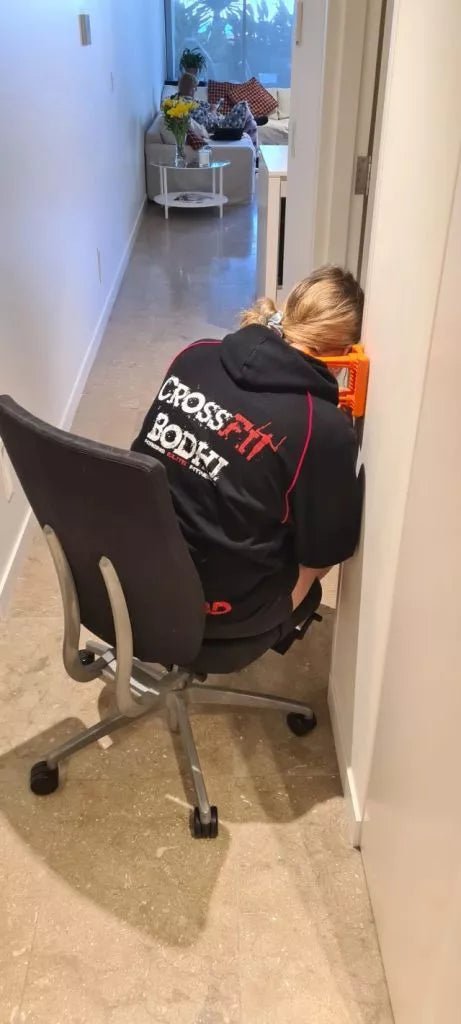
Do not push with your hand as you may use too much pressure and cause an injury, just use the weight of your arm. In Side lying use the tall option with hand on side of head to increase the side bending, again do not use any force just use the weight of your arm. Put towels or pillows under your head if the pressure is too strong to start with. The MM tool works brilliantly on the neck, the 25 mm diameter of the tool is the exact diameter needed to get those joints moving and soften the often very tight muscles there. Headaches and pain behind the eye are caused by referred pain from pinched nerves in your upper neck. Place the tool under your upper neck just below the skull to open up the space where these nerves are and take the pressure off them. Place a pillow or towel under your head to start with so there is not too much pressure. If you have had whiplash like in a car accident or know you have an unstable segment in your neck you should avoid that segment with this tool. Ask a health professional if in doubt.